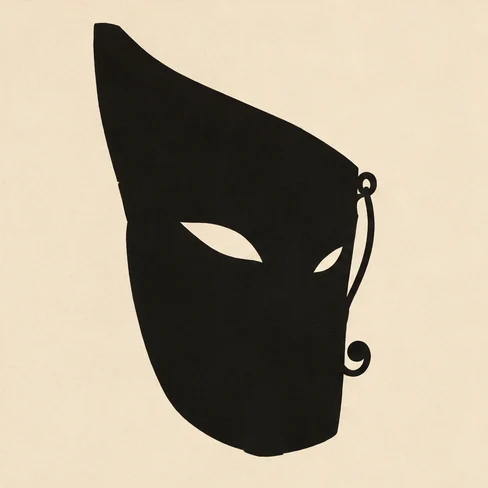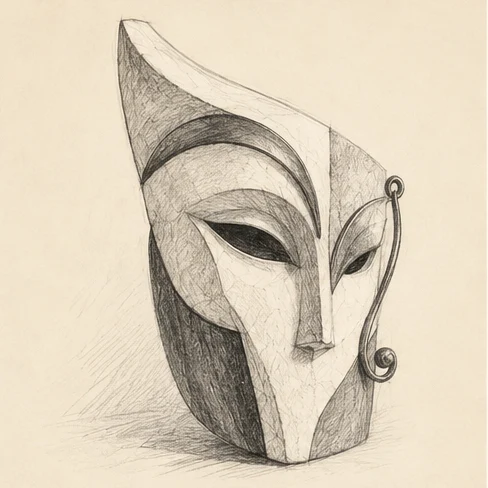
A mask design needs more than an attractive face. It needs a reason to be on stage, a relationship to a performer and a record of how decisions were made. The following sequence is a proposed design workflow, illustrated with a fictional mask created for this journal.
Write a brief that can guide a choice
Start with the role of the object in the performance. Does it conceal a change of character, exaggerate a posture, or create a contrast with an otherwise plain costume? Describe the action rather than attaching a vague mood to the design.
Our imagined brief is a mask that reads as composed when still, but creates a broken outline when turned. An uneven brow and a long cheek offer two ways to explore that idea. Neither feature has been assigned a traditional or religious meaning.
Separate shape from finish
Draw a small set of rough alternatives before adding ornament. Compare the eye position, the extent of the lower face and the relationship between the mask and the visible head. Keep rejected sketches: they make the eventual choice easier to explain.
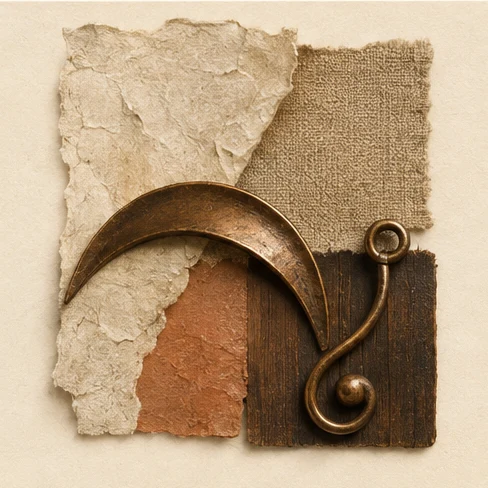
Once a shape has been selected for further work, use a separate sheet for the surface. In our study, warm ivory and a narrow bronze-colored line keep the ornament subordinate to the face. The visual effect of a metallic finish is not a promise about the material underneath.
Use a mock-up to ask physical questions
A digital view does not demonstrate fit. Before a wearable piece is produced, a maker must choose suitable materials and evaluate attachment, visibility and edges with the performer. A preliminary mock-up should be treated as a way to find problems, not as permission to perform in an unassessed object.
Write down what still needs checking: how the mask is removed, whether it catches costume fabric, and what happens during a quick turn. Any fabrication involving chemicals, dust or powered tools needs appropriate specialist guidance. This article is not a casting or safety procedure.
Rehearse, revise and document
In a real production, the final appearance would be considered with the costume and stage light, then revised in response to use. Record the version, materials, finish, maker, care instructions and relevant permissions. Keep a distinction between the original design and later repairs.
Historical references should have their own notes. The V&A’s discussion of Oliver Messel’s designs for Zéphyr et Flore offers a documented case of masks made for a particular production. It can prompt a research question about design and performance; it does not establish a lineage for our original concept.
Sources & scope
These references support the factual context. The exercises and concept-mask interpretations are original editorial proposals, not reports of practical testing.
- Victoria and Albert MuseumOn the road
A documented example of Oliver Messel’s mask designs for Zéphyr et Flore. No connection to the fictional mask pictured here.
- Smooth-OnSpecial effects and props: tutorials
Manufacturer examples of moulding and casting for props. Commercial technical source; no endorsement or affiliate link.
Text prepared with AI assistance. See authorship and human-review status. Source review and last update: 6 September 2026.