A sound does not have to accompany every step. It may introduce an entrance, draw attention to a pause or arrive a moment after a gesture. Thinking of percussion as a partner in staging makes space for more than continuous musical backing.
Listen to what actually vibrates
The Met’s instrument-family guide distinguishes instruments by how they produce sound. A drum with a vibrating stretched membrane is a membranophone; a struck instrument whose own body vibrates belongs to the idiophone family. This distinction describes a sound-making mechanism, not the identity of a musical tradition.
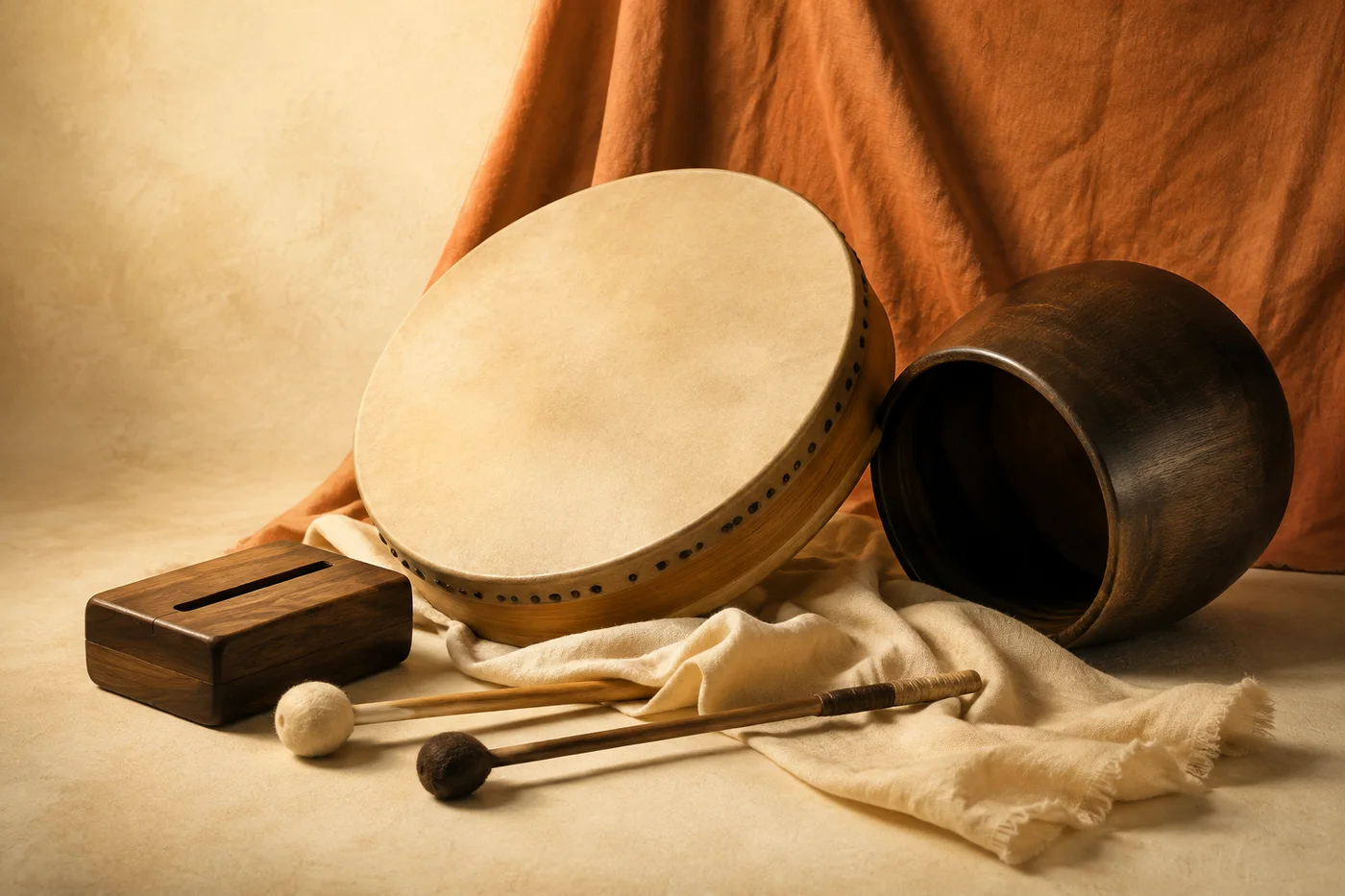
The frame-drum and woodblock forms in our illustration suggest contrasting sound sources. Their actual tone cannot be determined from the image. Material, dimensions, construction and the way an instrument is played would all need to be considered in a real rehearsal.
Give a cue one clear job
Consider an original scene exercise: a performer enters, stops to inspect an object, then turns away. First, let a single sound mark the entrance. Next, move that sound to the moment of stopping. Finally, place it after the turn. Each version asks a different question about which action receives attention.
Write the cue beside an observable action rather than an ambiguous feeling. “As the hand releases the object” is more actionable than “when the scene becomes mysterious.” The exercise is a proposal for rehearsal, not a report of a tested production.
Explore agreement and interruption
Movement and sound can align, but they can also disagree deliberately. A regular pulse beneath an uneven movement may make the contrast noticeable. A pause in sound can leave a gesture exposed. Avoid treating louder or faster as the only routes to emphasis.
Build a simple cue sheet with an action, a sound source and a person responsible for the cue. Include silence as a written instruction where it matters. A sheet that records only sounds may overlook the moment when they need to stop.
Credit the practice, not just the object
When borrowing a documented rhythm or referring to a named instrument tradition, identify the source and seek the relevant expertise and permissions. A decorative pattern on a drum is not sufficient evidence of its origin or of how it should be played.
Our still life is deliberately not assigned a cultural identity. In an actual production, the musicians’ contributions and the provenance of any borrowed music belong in the programme and production record. Sound-level and hearing considerations also need assessment in the real venue; an illustration cannot provide that assessment.
Sources & scope
These references support the factual context. The exercises and concept-mask interpretations are original editorial proposals, not reports of practical testing.
- The Metropolitan Museum of ArtMeet the Musical Instruments at The Met!
Instrument families distinguished by how sound is produced, including membranophones and idiophones.
Text prepared with AI assistance. See authorship and human-review status. Source review and last update: 6 September 2026.